We open to the explanation of what this series is supposed to be all about. When a disaster looms, the goddess calls for six heroes to awaken and save the world. This happened six hundred years before the current story as well as three hundred years before the story. There are always exactly six of these braves. Then why are there seven heroes this time around? That can only mean one thing, there is a traitor among us. But first we need to establish the seven candidates who are claiming to be members of these six heroes.
Adlet as a character is definitely on the more abrasive side at times.
The first one is Adlet Mayer who proclaims himself the strongest man in the world and summarily interrupts a duel in front of the king. He does so by fighting dirty, but putting his methods aside, he is very effective. Then again, bringing a bunch of tricks and poison to what is supposed to be an honorable duel is a pretty shitty thing to do and Adlet soon ends up imprisoned. The second brave is the princess, Nachetanya, who is also known as the saint of blades. When both get chosen as braves, she frees Adlet from his prison and the duo set off towards their destination in the west. There they will meet up with the other four braves. Or five, as the surprise twist of the series ends up being.
Everyone’s favorite sad girl who has a deep secret and is just sad all of the time. Her character felt deep and well developed to me the first time I watched the show, but seeing it again now she seems much more shallow than back then.
The other five braves are an eclectic bunch too. The first two that we meet outside of the princess and Adlet are the princess’ personal knight Goldov as well as the presumed hero killer, the white haired sharpshooter Flamie. Where Goldov is ready to help the princess immediately, Flamie quickly proclaims herself an enemy and does not wish to join up with the rest of the gang. Separating from Nachetanya, Adlet now follows after the mysterious new girl. At the temple where they get stuck they meet the rest. Chamot, saint of the swamp, Maura saint of the mountains and finally a weirdo named Hans Humpty. It’s a colorful cast for sure, but this is the moment they all start to realize something’s wrong. That’s one too many. And all of them have the crest that makes them heroes. This is where the real story starts, a mystery to figure out who is the fake.
The gang’s all here, just imagine Hans off to the left, he’s just off screen after all.
So we have a locked room mystery. The moment Adlet encountered the fiend at the outskirts of the temple, he tried to break open the door, and when he did so, the barrier activated. No one was seen entering or exiting the room after he entered it, and we know that Adlet didn’t activate the barrier. We’ve seen him get his crest, we’ve followed along his journey and he is the only person we know for certain that is accounted for at the time of the betrayal. Knowing what the solution is to this puzzle – as I remembered it while I was rewatching it – makes it seem super obvious, but I remember being fully unable to figure it out the first time around. With all the pieces in play, we now have to deduce who the real betrayer is, deal with them, and then continue on the journey to actually deal with the fiends.
Oh, there’s Hans.
Upon rewatching this show, I found myself having mixed feelings about it. I like the concept a lot, but both Chamot and Goldov were getting on my nerves as characters pretty early on. There are some inconsistencies in the storytelling as well that feel more like red herrings than good writing, but these are minor complaints. Flamie and Adlet, the two we spend a majority of the time on, are both fun characters in all their bravado and teenage angst. It’s a real shame this never got a sequel, as it’s based on a light novel and we all know that most anime fans can’t read. I remember wanting to read the novels back in the day, and I still may one day, but it’s not high enough on my priority list right now to start on anytime soon. As for if you should watch it, yeah, probably. It’s a fun mystery with a colorful cast that doesn’t overstay its welcome. Although the twist at the very, very end kind of sucks and is the main thing people ended up remembering from the show. I do like reading light novels from time to time, and if you’re like me and every time you think back to this show you kind of want to see where it goes from here, at least the novels have been translated to English, although I did see that the physical editions are rather pricey. Ebooks are much cheaper if you’re one of those people, but I’ll leave it up to you. For now, if you like a good mystery, give Rokka no Yuusha a watch and if not, well, at least thanks for reading.
The legendary pirate captain, Rocks D Xebec. The man who was once on equal footing with Roger and who was the leader of a band of fighters which included three of the modern day emperors as well as Shiki the golden lion who we’ve mostly seen in the One Piece movie Strong World, but was a legendary power in the lore of One Piece and could still be lurking somewhere in the world. We learned about Rocks pretty late into the story, but his influence on the world of One Piece has been felt since early on. Garp’s elevation to hero of the marines was due to stopping the rampaging Rocks – although details of that incident were only revealed to the reader very recently – and Roger, Shanks, Blackbeard, Shamrock, Imu and the aforementioned former emperors all have a history with the man. But who was this legendary villain? And what was his modus operandi that got him to captain such a powerful group of pirates? Let’s dive into the life and legend of Davy Jones’s descendant. As the title and this introduction should have made abundantly clear, this post will be full of spoilers, so read at your own discretion.
We have known about Davy Jones for a while, as the Davy Back fight we were introduced to in Long Ring Long island could only have been named after the famous pirate Davy Jones. What we didn’t know until now is the influence this family had on the world, and this influence ran deep, considering one of the major antagonistic forces in the world that has been with us since early grand line is actually Davy D. Teach. And Rocks – the name Davy D. Xebec used – was the legendary pirate captain who perished at the God Valley incident. This incident was finally revealed to us during the flashbacks on Elbaf and it was one hell of an incident. To summarize everything neatly; Figarland Garling found out about the existence of Davy family members on the island and targeted it for the next round of native hunting where a bunch of the World Nobles would hunt down the natives as well as several slaves they let loose on the island and the winner would win the grand prize, the beautiful former pirate captain Shakuyaku. With this prize – as well as the knowledge that his wife and child were on the island – it was no surprise Rocks made landfall as quick as he found out. And his presence caused both Garp and Roger to make their way here too. Fights erupted and after Imu took control of Rocks, he was mercy killed by Roger and Garp, who teamed up to deal with the legendary captain. But this does paint a very different picture of Rocks than the one we knew.
And it got me thinking about his son, Blackbeard. He’s done a lot of antagonistic things throughout the series. He’s fought with Law, he’s the reason Ace was captured in the first place, he tried to attack Luffy twice, he freed a bunch of dangerous criminals from Impel Down, he kidnapped Pudding and he even killed Whitebeard, although the old emperor would have likely died at the Summit War regardless of Teach’s appearance. Yet despite all of this, I still think there is a chance for redemption in Teach’s story arc. For one, Rocks’ story was one of persecution. He was a terrifying pirate captain, sure, but the main reason he was persecuted was his family name. He lost his wife, his freedom and almost lost his son purely because of who he was born as. I don’t think it is Oda’s normal style to have his son follow in his footsteps and meet a similar end. Now I don’t think Teach will be turned into a friend that will be happy and jolly with Luffy in the end as they all sing songs around the campfire, but I do believe that there will be more to Teach’s story than just a fight where Luffy beats him into submission.
What this will look like, I don’t know, but he is the last remaining member of the Davy family, and having the family disappear completely after we’ve learned that Rocks was on somewhat friendly terms with Roger and his crew and also cared greatly about his wife and was a threat to Imu, it feels undeserved that his child – which he gave up everything for – will die a villain just like he did. What I predict is that Teach will end up clashing with Imu somehow and be overtaken by Domi Reversi or a similar ability. Luffy will then defeat him but grant mercy after Imu is inevitably defeated, granting the Davy family a way out of the loop of violence. Perhaps it will end with Teach in prison in some form or something similar, but I would be a bit disappointed if his story ended sadly.
And what we also learned is how Rocks got his powerful crew in the first place. He employed the Davy back fights to gather crew members. Some visionaries in the One Piece fandom have been saying that Long Ring Long island would become a crucial arc for the story, and I think they were right. We’ll definitely see more of the Davy back fights towards the end of the story. Perhaps it’ll be between Luffy and Teach, or Luffy and Shanks, but I think we’ll get one more hilarious round of these games. We have to remember that the original Davy back fights weren’t nearly as long as the anime made them, and they weren’t all that bad. I reckon we can get some fun out of that towards the end, after Imu has been defeated. I reckon it could be a great way to sunset the story too, having Shanks and Luffy and their crews engage in a friendly set of games as the story fades to black. Perhaps Blackbeard joins in on the fun. They will all sing songs around the campfire and… yeah, who am I kidding. I have made so many predictions about One Piece throughout the years and most of them completely missed the mark, so please don’t expect any of what I’ve said here to be even remotely right. But it’s fun to fantasize sometimes, right? Thanks for reading. I’m excited for the rest of this arc and even more excited for what comes after. It’s a great time to be a One Piece fan, and it doesn’t look like that will change anytime soon.
Because I am running out of ideas – not in the long run, but a lot of the ideas I have for anime posts require a bit more time (like this season ending, next season starting and me finding the time to rewatch old shows) – there will be a one week break next week. After that I will be back and if everything goes according to schedule I will be talking about my experience rewatching Rokka no Yuusha. I’ll hopefully see you there!
At the time of watching Orange for the first time, there were not very many drama romance shows I was familiar with. I didn’t really start my (shallow) dive into romance manga yet, and shonen action was definitely still my preferred genre (alongside Isekai). So a really solid drama like Orange – although not my genre per se – was always going to leave a big impression since the comparisons to other shows weren’t there yet. Which got me to wondering, how will I feel about this show if I rewatch it a decade later. By today, shojo romance manga are a staple in my manga consumption with series like The Fragrant Flower, Horimiya and Skip & Loafer all being favorites of mine. So with that all in mind, let’s take another look at Orange.
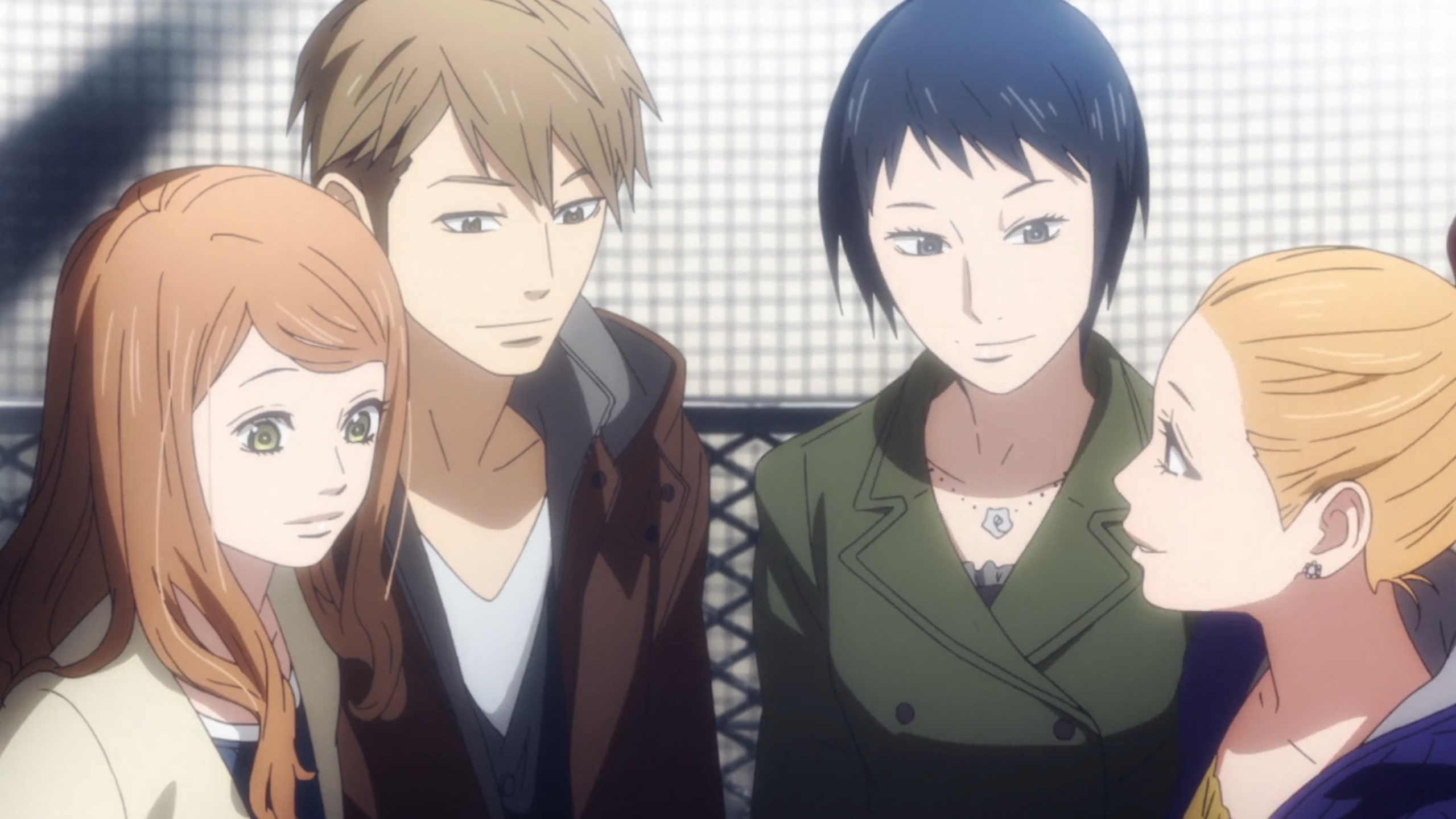
The cast comes together in the future to read the letters from their past selves.
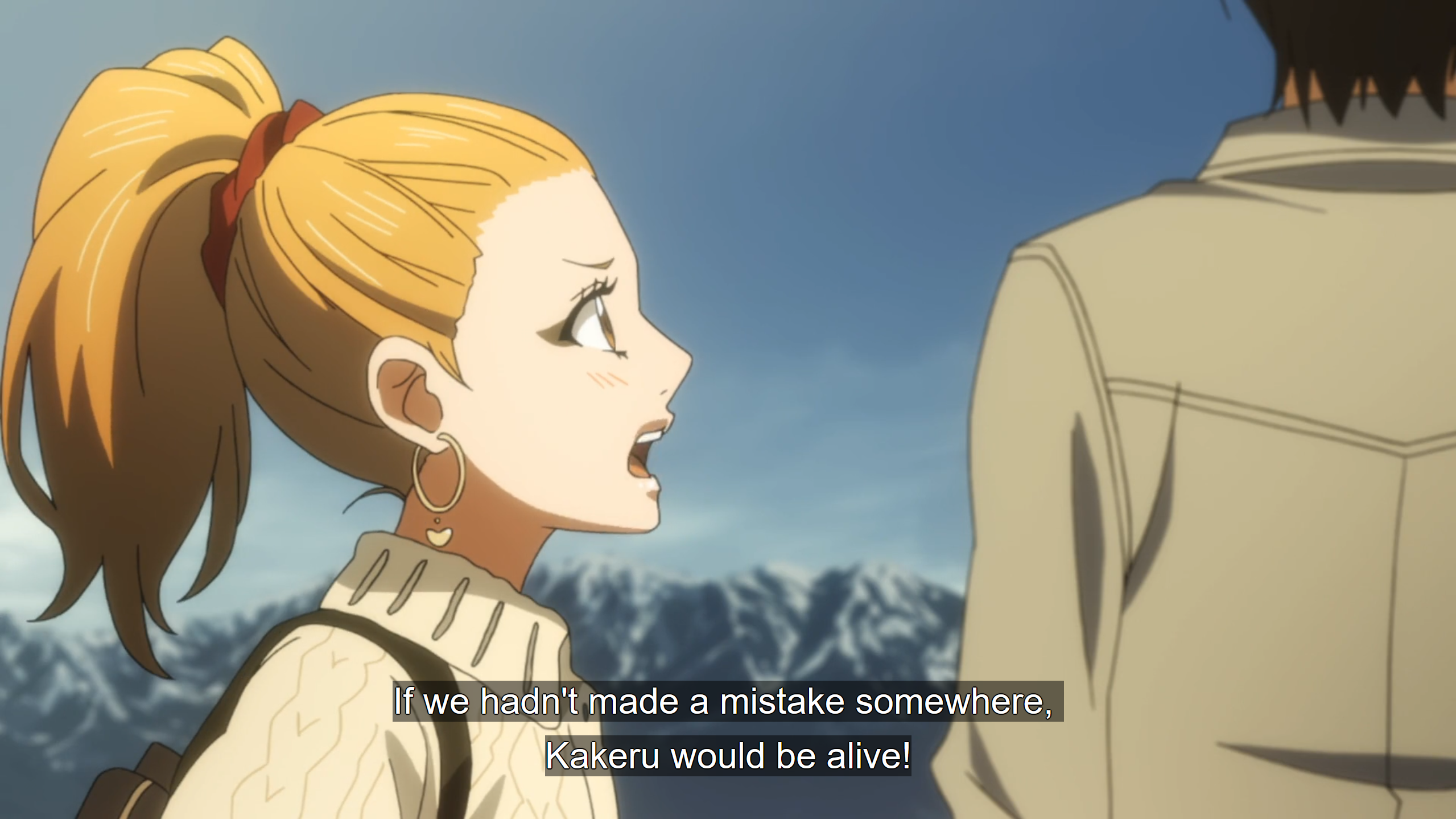
Let’s start with the two parts of this series that are the most memorable for me. The two things I could still remember after all these years. The first one is the core plot point, which involves the main character Naho sending a letter to herself from 10 years in the past. Apparently their friend Kakeru – who Naho has not met yet when she receives the letter from her future self – was going through a lot more pain than they realized at the time, and ended up dying tragically. Her future self then implores Naho to do things differently, in an attempt to save Kakeru. To prove that the letter is actually from herself in the future, she adds several diary entries about things that have yet to happen, and Naho watches as these events unfold in front of them, the first big one being the new transfer student; Kakeru.
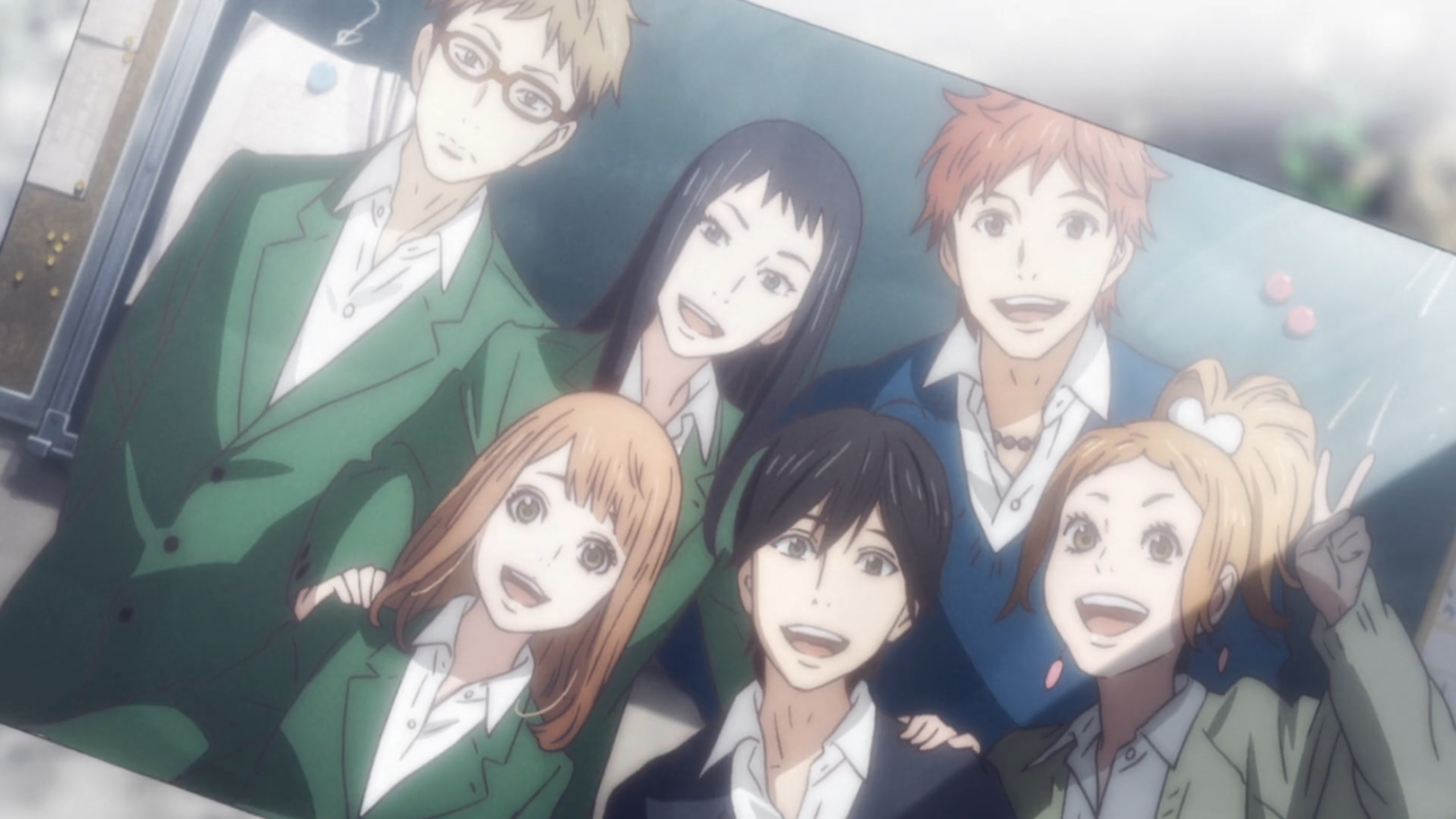
From top left to top right: Hagita, Takako, Suwa From bottom left to bottom right: Naho, Kakeru, Azu
The second thing that has always stayed with me about this show is the opening song: Hikari no Hahen by Takahashi Yuu. The tranquil and melancholic pop song has never quite managed to leave my consciousness completely, coming up in my playlists from time to time or while I’m watching anime opening compilations. It even sometimes randomly pops up in my head simply due to how incredibly catchy it is. The accompanying shots of the main cast are melancholic in a way that fits the music and it does its job of getting you in the mood for an emotional story.
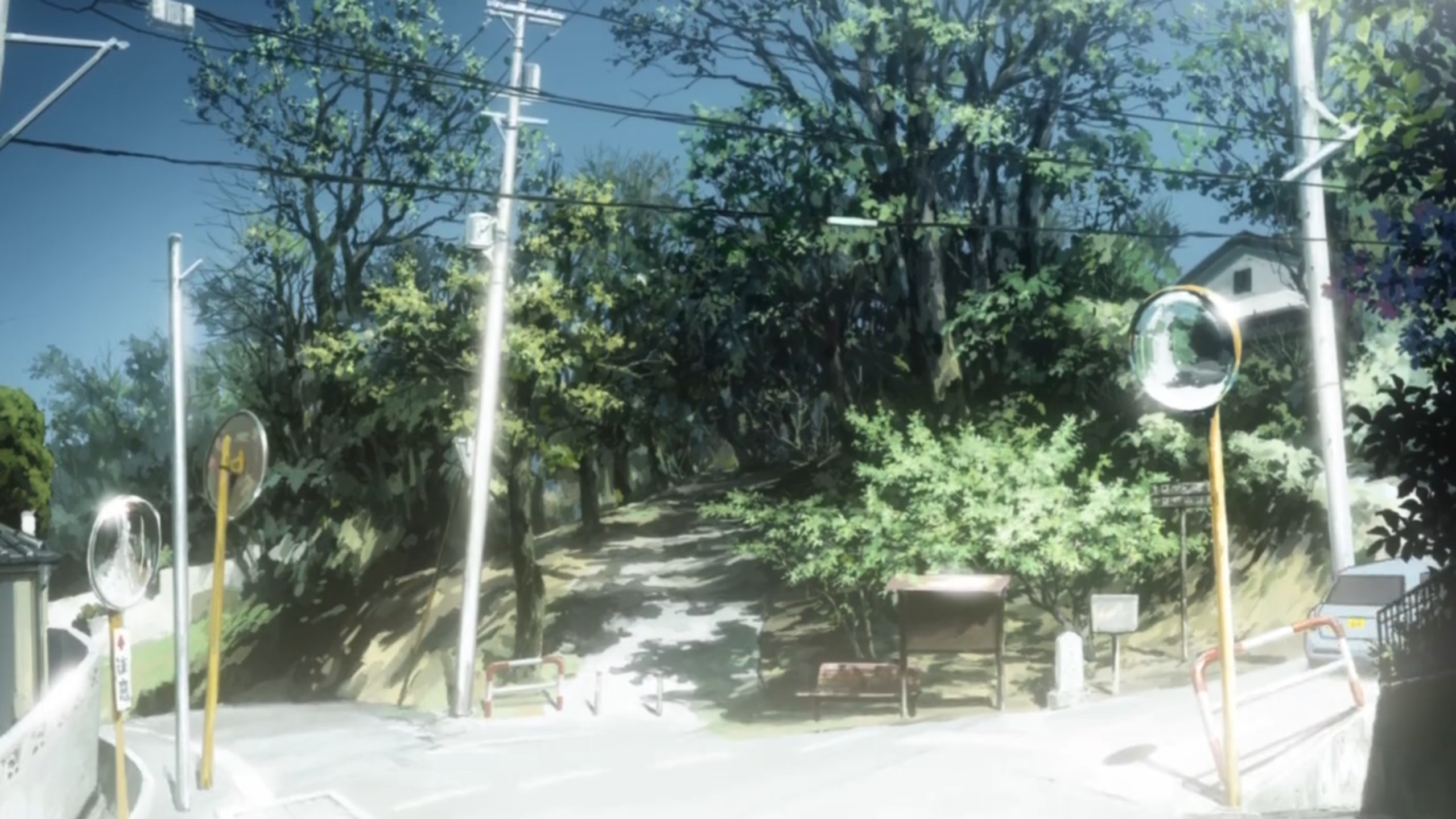
The first thing I noticed that I don’t think registered with me the first time I watched Orange is the backgrounds. This show does take place in a city, but it’s a more rural city than something like Tokyo – where Kakeru is from – and that’s very well conveyed by the backgrounds. Many of the gorgeously drawn shots have trees in them and the surroundings that the cast often finds themselves in feels much more open and tranquil than many other stories with similar settings. Skip & Loafer actually touches on this from a different angle, where we leave the city to visit the countryside later in the story and that really hammers home the difference in lifestyle. Orange is somewhere in the middle of the two.
This is what the town looks like a lot of the time, but also interspersed with more “modern” buildings and city streets, which brings for a very cool looking city that I’d love to walk around in.
Then the characters themselves. We look at this story through the eyes of Naho, but there is a group of six characters that we end up spending most of our time with. Naho is timid and kind, Suwa is popular and athletic, Azusa’s family owns a bakery and she is very outgoing as well. Meanwhile Hagita is much more introverted and spends as much of his time as possible reading, but he usually does so around his friends and joins them in any activities either way. Takako is more stoic and quiet. Lastly, we have Kakeru, the transfer student from Tokyo and the reason this story is happening. Kakeru is an interesting character due to how we learn some of his tragedies without seeing them clearly reflected in the character. Let’s dive into the story.
As mentioned earlier, the future versions of the friend group – minus Kakeru – met up long after the current timeline, and future Naho sends a letter to her past self detailing some mistakes she made due to being timid, that she would like her past self to avoid, in hopes of creating a better future for their friend. Although Naho is very sceptical – and still understandably timid – she quickly realizes that there’s definitely something to this letter, as it’s doing a great job at predicting the things that will happen in the next couple of days. After she fails to do anything different when Kakeru first shows up, the transfer student stays away from school for a while. We later learned that the reason Naho’s future version didn’t want her to invite Kakeru on their day out was because his mother committed suicide that afternoon, and that is why Kakeru was absent for a while.
Yeah, he’s a sad boy
Without going into spoilers, there is a lot of focus on being who you are and then changing that person to a different version of themselves that still includes some of their initial characteristics. In particular Naho is trying her best to become more outgoing and more confident. We slowly learn more as the series continues and later on there is a twist revealed to us that is pretty well foreshadowed, but I definitely didn’t catch it on my first watch through.
I’m not a big fan of time travel shenanigans usually and I mind it a bit less when it’s explained as separate worlds. The reality here is still true, but things are happening different in another timeline. Still, it’s a topic that I struggle to believe in.
Considering all of that, I think it’s safe to say that giving Orange a watch – if you haven’t yet – is definitely worth the time. It’s a well crafted melancholic romantic drama with well written characters and an interesting plot hook in the time travel shenanigans with the letter. It’s not going to reinvent the genre by any means, and it can be a bit slow at times, but I really enjoyed rewatching this series.
I’m slowly working on my top 10 manga list, which has proven to be quite difficult. I haven’t read nearly as many manga as I’ve watched anime, and often the reason for picking up a manga in the first place is the fact that I really enjoyed the anime and wanted more of the same, making it so that a rather large portion of the manga I’ve read are really good. Or at least I really enjoy them. But there are also some manga I really enjoyed that I probably wouldn’t (and shouldn’t) put in my top 10, as they aren’t all that good. I’ve talked about this before, something can be enjoyable without being good (in the sense of being critically acclaimed). I really enjoy Mario Party Lets Plays, but I wouldn’t say they deserve to win an Oscar. All this to say, let’s take some time today to look at a couple of guilty pleasure manga.
Fairy Tail
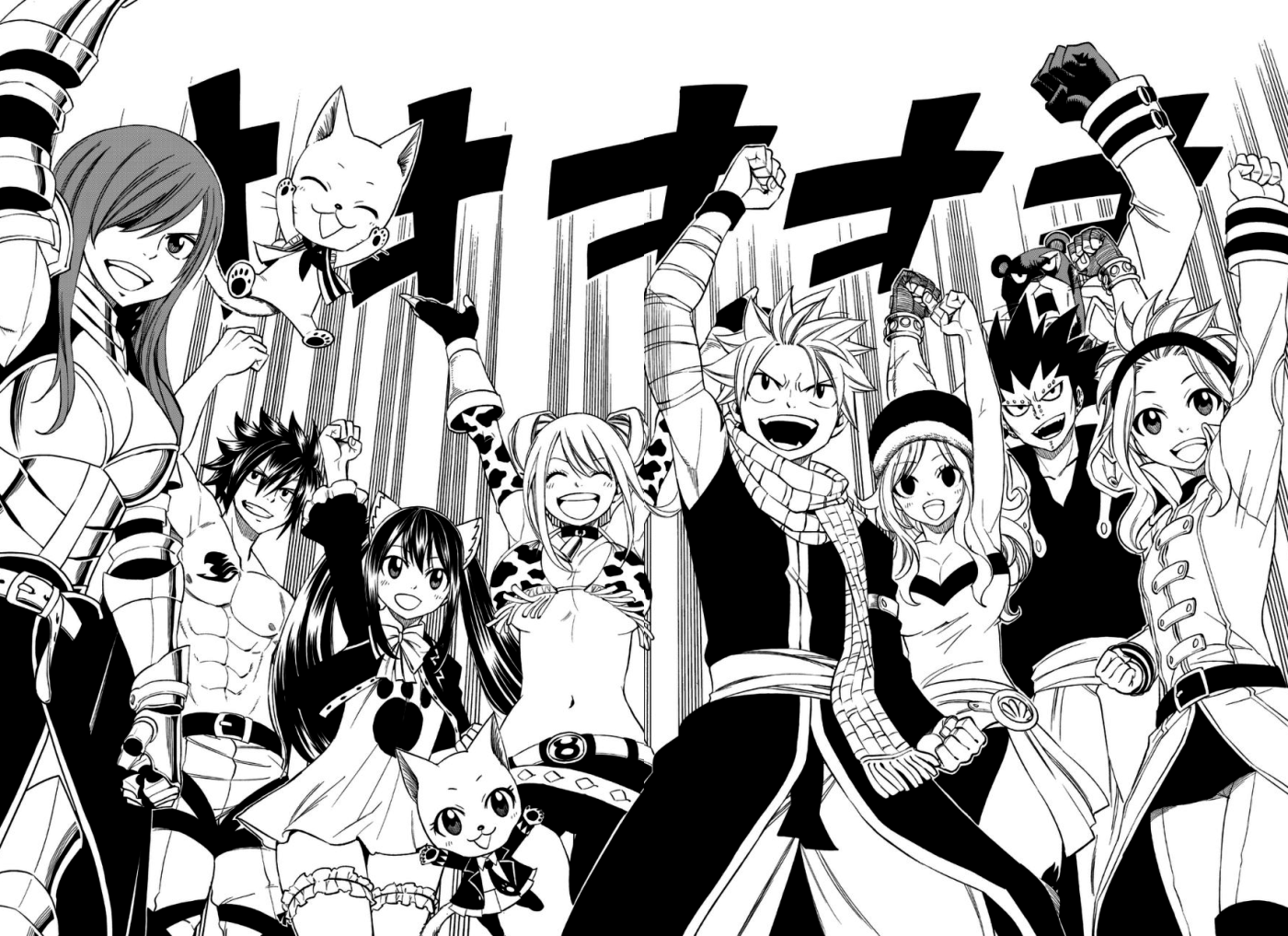
When I was initially introduced to Fairy Tail (the anime) I was still quite young. I’m too lazy to do the math, but I believe it’s a little over 16 years ago. The anime had just started and I was caught up pretty soon into the story. It was also one of the manga I picked up pretty early on, alongside other shonen series like One Piece, Bleach and Naruto, which were all still ongoing at the time. That’s crazy to think about, having those three manga come out weekly felt like it was almost a guarantee in life, even though two of them ended a decade ago. This shonen series written by Hiro Mashima (Fairy Tail, Rave Master, Eden’s Zero) follows Natsu Dragneel, Lucy Heartfilia and the other members of the Fairy Tail magician guild, as they deal with all sorts of requests. The overarching plot of Fairy Tail is rather weak, let me be upfront about that. Mashima himself has gone on record to say that a lot of Fairy Tail wasn’t very meticulously planned, a habit he deviated from when creating Eden’s Zero afterwards. I’ve always assumed that he had a pretty good idea about the Oracion Seis, the first handful of antagonists that all fell into a single larger group, but lost focus after that arc ended and had to keep coming up with fresh ideas. A secondary problem that Fairy Tail has – that ended up ruining quite a few moments for me – is the power scaling. Fairy Tail used to be the king of what we call “the power of friendship”. Whenever a character’s friends were in trouble, they’d suddenly awaken to some sort of new power without any proper explanation where it came from and through some bullcrap defeated their opponents by a hair. Laxus winning in the tournament is one of the more egregious examples of this, in my opinion.
The main gang in the manga, although many side characters play sizable roles.
Now, having said all that, we’re talking about Fairy Tail because it’s a series I deeply love. Then what are its selling points, if there are rather big problems with it? Let’s start with the big one. Fairy Tail as a guild is freaking dope. Joining a group of eccentric mages who are funny, social, very capable and will walk through hell and back to help out one of their own? Sign me up immediately! There’s a bond between these characters – which you also see in Mashima’s other works – that rivals even the bond of the Straw Hat Crew in One Piece. Where both Bleach and Naruto thrive on conflict within its main cast, Fairy Tail thrives when everyone’s eyes are looking in the same direction with no doubt in their mind that they will do everything for their friends. That’s also why the whole “power of friendship” thing can be a double edged sword. It’s not a very good way of writing an action story, but when push comes to shove, I still find myself very excited whenever an antagonist gets pummeled into next week. Add a fun but shallow world to this and a colorful – despite being black and white – magic system and you have a manga that may not win many prizes, but can be enjoyed without feeling too guilty. Out of the three manga I’ll be talking about, this is the one where I would recommend giving the anime a shot too. It doesn’t really add to the manga on my fronts, but the soundtrack is beyond incredible. The celtic influences are an incredible touch of genius.
Gantz
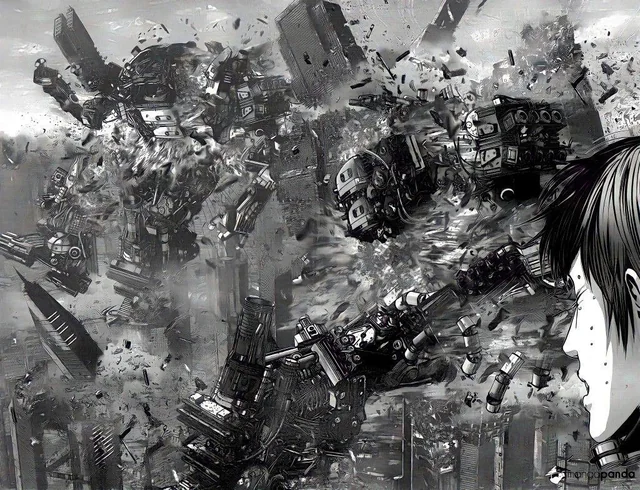
Oh dear, am I really going to talk about Gantz? Talk about a proper guilty pleasure manga. I almost considered leaving this one out for being a bit on the controversial side. It’s generally not a manga I would be quick to recommend to others. I considered putting Tokyo Ghoul in this spot but despite some of Sui Ishida’s stranger quirks, I think putting it in a post for guilty pleasures would be a disservice to the manga. So here we are, back to Gantz. Truth be told, I’ve read the Gantz manga back to front several times, despite its flaws. Gantz tells the story of two boys who both die in a train accident before finding themselves in a strange room. In this room is a black orb that tells them to fight for survival. They are given super suits and weapons – later on – and have to deal with an invading alien. If they succeed, they live to see another day and if they succeed enough times, they can escape this deathloop and return to life. Gantz mainly follows Kurono Kei and Masaru Kato, but has a large revolving cast of characters, some of which we spend quite a lot of time with. The harsh reality of the world of Gantz is that people die pretty often and pretty suddenly when encountering deadly aliens, and friendships often don’t develop long enough when all your friends are smears on the ground. Alongside the gratuitous violence is a pretty large amount of nudity and sex, which was definitely a part of the appeal when I was younger. As the story progresses we are introduced to more aliens, vampires and we even visit other alien civilizations. All the while things are going from bad to worse for many of the people involved until we finally reach a conclusion that leaves you wondering why you just spent all your time on this series.
This is the type of strange art you will find in the Gantz manga.
Now let’s address the elephant in the room. If violence and nudity were the only “problem” this series had, I would be recommending it a lot more often than I actually am. The truth is, in one of the later arcs of the story, a character decides that he wants to shoot up a mall. And when he does this, he does so in blackface. It’s a pretty awful arc and the implications that a black person shooting up a mall makes more sense than a Japanese person doing so is pretty sickening. The author also used computer generated images as the base for a fair amount of panels which makes for an interesting artstyle. I think it’s not a fantastic looking manga, but that’s the least of my criticisms. If you like stories that are unapologetically violent and can ignore some of the issues, then perhaps look into Gantz. There’s a CGI movie on Netflix that focuses on one of the better arcs in the series and I think it’s pretty well made, so that would probably be your best place to start.
History’s Strongest Disciple Kenichi
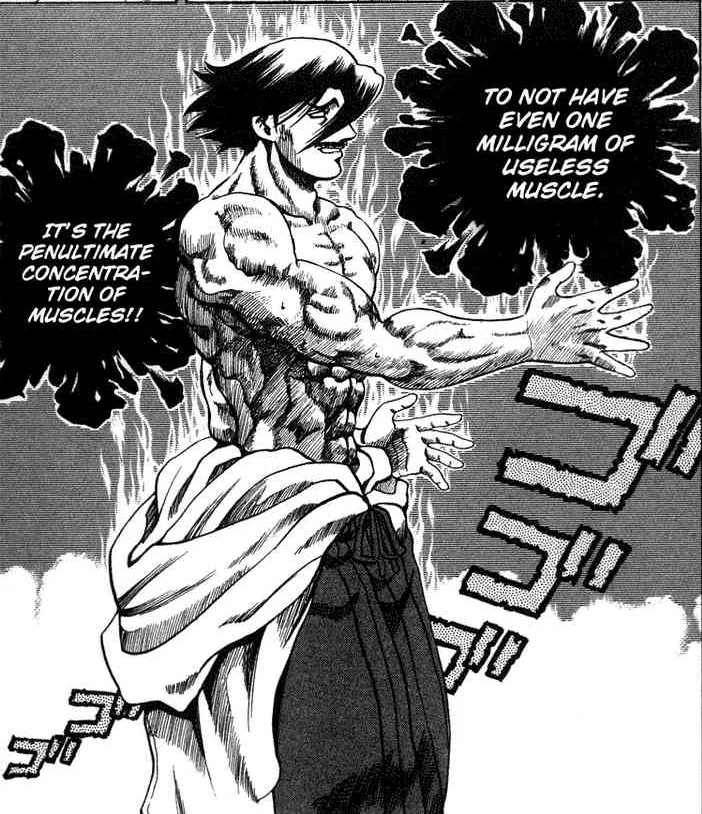
I’m not certain any of this holds up to science standards, but neither do any of the other shonen manga, so why start caring now.
Let’s move on to a series that is a bit less controversial and a bit more palatable for the average reader. History’s Strongest Disciple Kenichi is your classic shonen action series. If series like Jujutsu Kaisen and Chainsaw Man get praise for breaking the mold and doing something refreshing to the genre, Kenichi is the most standard of series. The titular Kenichi is a young high school boy and a bit of a dweeb. He loves reading, has no friends, is weak and gets bullied. One day a transfer student comes to their school and kicks him in the face because he approaches her from behind and that is one of her bad habits. I know many girls who roundhouse kick their classmates in the face just for standing near them, so so far it’s a 100% on the accuracy. Kenichi and Mio – this girl – quickly become friends and when Kenichi gets into trouble with an upperclassman, Mio decides to help him prepare for the upcoming fight. Mio’s grandfather owns a martial arts dojo after all. The story follows Mio, Kenichi and their peers and mentors as they fight against all sorts of people with the stakes quickly increasing. From fighting a local gang to dealing with the members of Yami and Yomi, two dark organizations full of assassins, murderers and their apprentices. This story has your classic plot elements like villains who become allies as the story goes on, tragic backstories, increasing danger and of course lots and lots of borderline nudity. If there was ever a manga explicitly aimed at horny teenagers, this one takes the crown. Of course it has a bunch of shirtless men in peak condition, that’s normal for shonen action, but the outfits some of the girls wear are not very revealing. With some perverted characters among the cast, this is where the story derives a lot of its comedy from and although as a younger man this was part of the appeal to me, reading it back as an old man (I’m 33, so basically one foot in the grave) it gets a bit grating at times. I’m not one to shrink back from this sort of material by any means, but some manga do this just to appeal to their readers and it does nothing to improve the story. Besides that, the story itself isn’t exactly mindblowing. There are a lot of very predictable “twists” throughout and some of the arcs can drag a little bit. Having said all that, I still go back to History’s Strongest Disciple Kenichi once every few years as a little treat.
There you have it. Three manga I would never consider to be pioneers in their field – perhaps Gantz has an argument with its interesting artstyle – but I still enjoyed enough to reread at least once. For Fairy Tail I would recommend the anime instead, although I also love the manga itself. In the case of both Gantz and Kenichi, they have short anime adaptations but I found both lacking and ending before things get anywhere all that interesting, so if either of those sound fun to you, definitely pick up the manga. I’m sure you can figure out some place to read it. Thanks for reading.
The first time I ever even really heard about Sailor Moon was through an Achievement Hunter video back in the day. Ray – who is now a Twitch streamer that I still watch after more than a decade – had a Tuxedo Mask skin in Minecraft and that was the first time I heard of the character and that it was from Sailor Moon. I sound so cool right now, don’t I?
Maybe not quite as suave and brooding as the real thing, but they got the rose right.
Years later, when I was well into my anime watching phase, about to recognize that it might not even be a phase at all, but more of a permanent illness, I knew very well what Sailor Moon was. A Shojo manga about magical girls and cats, and one of the most well known manga and anime out there, an inspiration for the modern generation. But I’d never actually watched an episode or read a chapter. For one, it was very old by the time I got into anime and although there are definitely older anime that I really love – Rose of Versailles comes to mind – I’m not quick to pick one up unless it really piques my interest. And second, I’m not a teenage girl, so I figured I wasn’t the target demographic.
Even before ever starting to read the manga, these were the characters I remember seeing, and I will say that seeing some of the other sailors throughout the series threw me for a loop. It’s also interesting how much I didn’t know. Like how Twitch streamer Ironmouse got her name from this series and how Amalee – whose musical covers I used to listen to and now sometimes pops up in streams I watch – voices one of the later sailors.
Having said all that, I am a pretty big fan of a lot of shojo romance manga. There’s something about how drama and character flaws are written in shojo manga that just feels much more real and tangible to me than a lot of shonen alternatives. Exceptions on both ends of course. So when I saw the announcement of the Naoko Takeuchi collection – a deluxe version of the entire manga at a lower price than the fancier box sets – I figured it was a good moment to jump in and give the story a shot. At the very least the box would look good on a shelf and the art prints would be a nice little thing to have. So I ordered both boxes, and then read through the entire story, extra volumes about Sailor V included. Let me give you my thoughts on the whole thing.
Let’s start with one of the biggest selling points for me, the art style. Obviously it’s a very recognizable art style, the classic old shojo drawings with the big eyes is one that will always be pleasant. There are some incredible artists out there who create panels that far outshine anything you’ll find in most weekly series. I for one really like Ishida Sui’s art in Tokyo Ghoul and Choujin X (although I couldn’t really get into the story of the latter) as well as SIU’s art in Tower of God. Another great one – and I will admit I had to look up the author for this one – Park Jin-Hwan from The Breaker. But there’s something just really nice about the classics too.
There’s also some fun attention to detail in this manga that really gives it a lot of personality. One thing that comes to mind is that when the main character – Usagi – is speaking off screen, her text bubbles contain a little image of a bunny, since that’s what her name means in Japanese. Usagi translates to bunny. There are also a couple of really funny moments in this manga that catch you off guard. A big one is that at the end of the first big arc, we start off the second arc with a toddler pulling a gun on the main character. If that’s not funny to you, I don’t think we can be friends. Of course that gets resolved pretty quickly, but it’s still a great moment.
This is what the Naoko Takeuchi boxes look like. This is not mine, I took this picture from Google. Contrary to popular belief, I don’t live in a white void.
Let’s talk about the characters next. The main sailors are great. Sailor Moon, Mars, Venus, Jupiter and Mercury all have their distinct personalities. You have the classic bubbly popular girl in Mina (Venus), the smart girl in Ami (Mercury), the stoic temple maiden Rei (Mars) and the transfer student Makoto (Jupiter). Of course Usagi herself is the titular Sailor Moon and she is your classic clumsy middle school girl who wants to marry her knight in shining armor – not an uncommon dream among the sailors – who ends up being the mysterious Tuxedo Mask (Mamoru Chiba/Mamo-chan/Prince Endymion). There are a lot of different names and titles for some of the characters. They each have their own history and future, and we later meet many more sailors in Pluto, Neptune, Uranus and Saturn. I’ll be honest, I wasn’t as invested in some of the later sailors. Pluto still seemed fun enough, but some of the subplot of these sailors having their own separate missions and being borderline hostile to the main group was grating at times. And of course in the final act we get a ton of different sailors from all around the universe which was fine for the story, but not particularly memorable.
The plot itself is a rather simple one. Some dark force is trying to kill all humans, drain their energy, take over the earth, the moon or both, destroy the future, whatever evil things you can think of. They start by sending some minions to deal with the sailors until they all get defeated and then the big bad is taken out. This repeats a couple of times until we’re at the center of the universe fighting the biggest bad out there. It’s not a particularly memorable plot, but it’s there mainly as a way to convey the moral of the story. And that is – of course – a coming of age story about young girls trying to find their way through puberty, boys and their dreams for the future. It’s a well executed story but the issue that plagues it in my opinion is a similar issue that plagues Bleach. I know, very different manga with a different demographic, but bear with me.
The first arc in Bleach is a group of teenagers dealing with an oppressive force of adults that is forcing their will upon them. The second arc in Bleach is a group of teenagers dealing with an oppressive force of adults that is forcing their will upon them. The first arc of Sailor moon is about a group of teenage girls who are trying to find themselves while dealing with boys, puberty and still trying to follow their dreams. The second arc of Sailor Moon is about a group of… you get the point I’m trying to make. Although the paint job is new each arc, it’s the same story just repeated a couple of times. By the time we get to the final arc, I was pretty bored of it. If this manga was half the size it was, I think I would be remembering it far more fondly.
Despite not being the target audience of this manga series, I really enjoyed taking a look at something that isn’t my normal cup of tea but is considered one of the greats. I doubt I’ll ever reread it, but I’m happy I gave it some time.
Lastly, let’s have a quick look at Sailor V as well. The prequel manga that follows Minako Aino before we ever find Sailor Moon. She is the titular Sailor V, the first of the sailor scouts to awake and a crimefighting teenage girl who wants to be an idol. With her cat Artemis – husband of Usagi’s cat Luna but we only learn about that later – she deals with all sorts of problems. We are introduced to Sailor V in the original story as well and she goes through the same trajectory there, but here we get a bit of a peek into Mina’s own life as a sailor scout before the group gets bigger. I didn’t enjoy the first of these two volumes. The second one was much better. There was more of an overarching story, the stakes were higher, and Mina was starting to come into her own as a character.
All in all, I’m glad I took the time to read this classic. It’s not going to ever be one of my favorites, as I’m clearly not the target audience, but I can see that a lot of love and talent went into creating this series, and at the very least the art is still really nice. I love the incredible animation in some of the more modern shows (and the latest arc of One Piece) but there is also something special about the charm that 80s/90s manga have. (and even older if we look at Rose of Versailles). If any of this piqued your interest, I recommend looking at the Naoko Takeuchi collection. It wasn’t too expensive (comparatively) and looks great on a shelf. Thanks for reading!
With a rather large school arc now seemingly behind us, we returned home to the cottage at the end of the last volume, where it’s time to wind down and relax a little bit, having dealt with Philomela’s grandmother and the accompanying corruption. Yet trouble stirs almost immediately again as the actions that Chise took by turning into a red dragon and swimming underneath the land have alerted the church and its allies, who are now investigating the incident to figure out who or what is responsible.
We start off this volume with Torrey giving Chise a bit of a history lesson about Britain and the witch hunts, which of course immediately triggers Chise’s visions and she almost ends up adding another curse to her long list of problems. Her being a Sleigh Beggy will never stop putting her into serious trouble whenever she is near anything even remotely magical, but she has good friends and allies here as Ruth jumps in to protect her. Back at Elias home we meet Jasper, the owner of said home and a long time patron of Elias due to a peculiar curse that runs through his family. His sister in law’s baby is currently the latest victim of the curse and they’re here to ask Elias to fix it. We learn about their history in a fun little side story and I wonder if we’ll return to this at some point with Chise putting a permanent stop to the curse. Oh right, and Zoe grows wings.
Josef and Elias meet at the information market where rumors spread. The aforementioned red dragon has been seen swimming under the British Isles and this is not a good sign, with a red dragon having the power to tear the earth apart into little pieces. Not many people and neighbours would appreciate that, but what they don’t know is that Chise is the one responsible. Josef ponders why he’s been left to stay here despite the horrible things he does and Elias basically informs him that he’s so unimportant that it doesn’t matter to him, which pisses Josef right off. Returning to the home, we learn that the first visitor of the year is underway.
The head of the St. George house is here with the official request for Elias and Chise to investigate the dragon, with Simon present to mediate for the church. Elias considers his options for a bit, which is a clear sign of growth for the mage. What’s even more important is that not only does he consider Chise’s safety, he also considers that of some of the other friends he’s made in recent memory, which is a completely new feeling to him. The duo confer and decide to help out with the investigation as long as nothing unsafe happens to Chise. That’s when we learn that Violet and Jasmine are also present, and Chise quickly figures out that there’s something odd about the twins.
This is where the different storylines start to slowly diverge into a common thread. Chise is likely undergoing a form of atavism. It’s a change in mythical creatures which was demonstrated by the dragon that went berserk as well as Zoe earlier in this volume suddenly growing wings. It’s a rare thing that can happen and it might be what is happening to Chise, allowing her to turn into a red dragon. Alongside all of this chaos, the St. George twins reveal that they have their own weird creature to deal with. It seems to be a newborn creature of unknown origin that has grown fond of the twins. They hid it from their father who found out within seconds, then they all hid it from Elias who also found out within seconds. They’re not very good at hiding things, but they think they are.
Lastly we zoom over to Lindell and the dragons, where a stranger approaches and danger lurks. Fortunately, it does seem like this stranger has no ill intent and is instead coming with a request. Hilda St. George asks him to come with her to England.
It seems like we’re still going to learn more about the different alchemist families, focusing on St. George now. They seem like good people and their house being responsible for dealing with all sorts of dangerous creatures probably means they’re pretty capable too. If only this doesn’t end in a tragedy for the twins or another curse for Chise. We can only hope. It looks like we will not have to wait nearly as long for the next volume, as the breaks around the last few volumes were quite long, but it looks like Volume 22 should be out in February or March. Look forward to another run through that volume when I get my hands on it and as always, thanks for reading!
Welcome to a new series I’m starting in 2026 in which we will revisit old series that I personally remember fondly to see if they hold up or not. This won’t be a weekly series, but there will be regular uploads. We’re starting with Rage of Bahamut: Genesis today.
2000 years after a disastrous battle with the ancient dragon of Bahamut – who was sealed by the angels and demons working together – the dragon stirs once again, and strange machinations are afoot. At the center of this conflict we find a quartet of characters who have to somehow navigate a war between angels and demons. Rage of Bahamut is based on a social card game by Cygames studio and is one of three anime to be made as a promotion for the game. Although the English version of the game shut down a decade ago, the Japanese version is still going and out of the many different anime based on games that I’ve seen, this one definitely stands out to me. Let’s talk about it.
As it has for years, this opening sequence has stayed in mind until today. It always gave me a Pirates of the Carribean kind of vibe and it’s stored in the same memory bank as Jack Sparrow running on the water wheel.
Favaro Leone and Kaisar Lidfard are two bounty hunters who are at odds. Kaisar blames Favaro for the death of his family and his fall from nobility and Favaro’s personality as a drunkard, pervert and general lowlife doesn’t help much with Kaisar’s perception of the red afro wearing bounty hunter. Bounties in this world are put on demons and collected in the form of cards, which only bounty hunters can collect and then hand off to Bacchus, the drunken god of wine and slacking off. Bacchus and his duck companion Hansa are returning characters in the series as well and develop a rather close bond with the main cast.
FAAAAAAVAAAAAAAAAROOOOOOOOOOO
One faithful day when Favaro spends the night boasting, he meets a young woman named Amira, who is trying to get to Helheim to see her mother. Favaro quickly proclaims he can bring her there for coin, with absolutely no intention to actually do so. Unfortunately for Favaro, Amira curses him in return, forcing him to accompany her on the harsh journey to this Helheim place. We soon learn that there is more to Amira than meets the eye, as she seems to possess demonic powers and perhaps even something more. She accompanies Favaro on the journey north, being chased by Kaisar.
Former nobility, reluctant bounty hunter Kaisar Lidfard, one of the four characters that make this show so much fun.
After dealing with Rita, a necromancer who lives in a city of zombies due to an old curse, but is sick of her lot in un-life, the quartet of main characters is complete although they’re definitely not all on the same page yet. Of course we learn more about Favaro and Kaisar’s complex history as the story continues, as well as what is the deal with Amira, but I will not get into spoilers for this.
Rita rounds off the main four and she’s a very fun character.
In the midst of this war between angels and demons for the keys to Bahamut, to either keep him sealed or release him and unleash mayhem on the world, there is a holy knight crowned by the archangels in the form of Jeanne D’arc. It wouldn’t be a fantasy story if there wasn’t a depiction of Jeanne D’arc after all. Hero of the people, chosen of the gods and hellbent on saving the world from certain destruction, she and her army are after Amira as she is a demon with one of the keys to Bahamut’s trap. Betrayal and death are around every corner as everyone on all sides of the conflict converges on Helheim for the finale of the story.
When I decided to pick this anime to rewatch, part of me wondered how well the quality would hold up. I remember enjoying the characters a lot – and even on a second watch the main quartet are an absolute joy to spend time with, Favaro most of all – and I remember it having a surprisingly high quality for a game adaptation. I think that quality definitely holds up after more than a decade. It doesn’t look like One Piece during the latest arc, sure, but the animation is serviceable and the darker than common art style fits really well for the dark themes and foggy and dangerous world we find ourselves in. The rest of the production also holds up, although it doesn’t stand out as amazing at any point, it never detracts from the show and I found myself quickly wanting to watch more of it. I’ll definitely cover the sequel anime at some point in the future as well.
This poor girl has not gotten much luck with her lot in life, but she has good friends at least.
So should you watch this show 12 years later even when you have no desire to play the game it’s based on? Yeah, I’d say so. I never played the game either, but I thoroughly enjoyed every second of the original run and my rewatch. Favaro, Rita and Kaisar are incredible characters with quite a lot of humor to them. I feel less strongly about Amira, but she is also more or less just a plot device given a voice. She’s not bad, but also the least memorable of the quartet. Supporting cast are fun, animations and art are solid, and the ending is satisfying. There isn’t really anything bad I can say about the show, so if you like fantasy stories with angels, demons and talking ducks, then definitely check out Rage of Bahamut: Genesis.
If you came here for another scathing review about the dumpster fire that is One Punch Man season 3, I’m afraid I’ll have to disappoint you. While I did watch it, I don’t think there’s anything I can say that hasn’t been said already. Instead I want to talk about another anime that involved punching, which I did enjoy very much: May I ask for one final thing?
Even Saitama is bored with being there.
A young Scarlet El Vandimion has been betrothed to the second prince of the Kingdom of Pallistan since childhood. But her prince turned out to be a real piece of work throughout his youth. That’s what you get for naming your son Kyle, I suppose. At a party for nobles he announces that he’s breaking the engagement with Scarlet, who has been silently bearing with his abuse. Now free from her shackles, she asks for one final thing. To punch both prince Kyle as well as his new girlfriend, Terenezza in their faces. She dons her punching gloves – which have studs on the knuckles because we don’t do things half-assed here – and punches the crap out of the many nobles in attendance as well as prince Kyle and Terenezza.
To the despair of her brother, this is far from the only nickname that Scarlet earns during this series.
This show really shines when it does exactly what it promises at the start. Scarlet punching the crap out of people who are written to be disliked is a very satisfying plot hook that is definitely a breath of fresh air. We have many villainess anime where someone is transported to another world to be the villainess, but to have the actual villainess beat up the person from another world for being a whiny person is a new one to me. Together with prince Julius (Kyle’s older brother) and the weredog Nanaka, this trio deals with all sorts of trouble throughout the kingdom as Terenezza is plotting to take over the entire place with her newly founded religion.
This poor guy can’t catch a break.
Where this show falls off a little bit for me is when we get into the second half and we start to actually develop a plotline about wars, alliances and different gods and powers. If I’m perfectly honest, the storylines surrounding that are rather boring, but the show manages to quickly regain your attention by having Scarlet ignore all protocol and just beat the crap out of whoever is in their path. Julius’ annoying provocations and the despair of Scarlet’s older brother about having to deal with his little sister add some nice light comedy to the show. With solid art, vibrant colors – especially when it comes to Scarlet’s design, who embodies the color that her name suggests – and decent animation, this show stands out above similar shows for me. If you like a show that doesn’t require you to do much thinking, but has some very satisfying moments, then I would highly recommend you check out May I ask for one final thing?. If only to get rid of the bad aftertaste that One Punch Man season 3 left. Thanks for reading.
Do not be fooled by his fake smile, this guy cannot be trusted.That is the correct response.
It’s been a little while since we last covered a One Piece volume, but the latest one landed on my doormat the other day and I am excited to dive into it. Reading the chapters every week has been a ton of fun, but so much has been happening in the last few arcs that it’s hard to keep track of all of it, so with the anime and the physical volumes it’s nice to repeat things and get a reminder of all the things that were going on. I’m also still far from bored with this series and am currently considering either rereading or rewatching it, but when am I not considering that. Anyway, let’s dive into this volume which should be the tailend of the Egghead arc.
We continue our adventure in the land of the future as the five elders in their demonic forms are trying desperately to keep Vegapunk from broadcasting his posthumous message to the world. With the help of York they think they have found the source, but it turns out rather quickly that they were wrong. The Straw Hats on the other hand – now aided by the giants from Elbaf – are trying to get off the island alive. A buster call has been attacking in full force and with Vegapunk’s main body already dead, there isn’t any good reason for them to stay here, they only need to get out with as many people alive and well as possible. This is posing to be a difficult task as the five elders turn out to be very capable fighters. When we were first introduced to these ancient bozos, I never expected them to be a fighting force and although I doubt their brawn is going to be a big problem in the future, they are definitely strong enough to give an emperor a run for his money which kind of makes sense considering they run the world so they need at least something to back up their authority.
Far and by large the most important thing that happens in this volume is Vegapunk’s message to the world, which he manages to get through despite the attempts at interference. What he tells us about is how the world used to be made up of several continents that now lie 200 meters below sea level. This is due to someone using the ancient weapons in a way that caused the water to rise to the level it is at now. The small earthquake and rise in sea level confirmed his theory and he is now predicting that this will happen again in the near future. The motherflame that he developed allows the people in charge to do some pretty nasty stuff – as we saw with Lulusia – that they can still repeat. What we also learn is that during the void century, the precursor to today’s world government was at war with Joyboy’s section (more on what that likely entails in a future volume), and it ended with Joyboy’s defeat. The last thing Vegapunk tries to reveal is what the middle letter of “D” actually means, but the elders manage to stop the broadcast at this point by attacking Emet, the iron giant who was just looking to meet up with Joyboy again. It is clear at this point that Joyboy also possessed the same devil fruit that Luffy has now and it makes me wonder if any other people had the fruit between these two people, but were snuffed out before they could make anything out of it.
With the message over, the five elders now fully focus on taking down Emet and the escaping Straw Hat crew. Atlas sacrifices herself to silence Lilith’s connection so that York thinks there are no remaining Vegapunk satellites left after Atlas blows herself up to propel the Thousand Sunny. On the water below, Luffy and Bonney both transform into a Nika form and pummel Saint Saturn into the afterlife as we get a quick moment between Emet and Luffy, who Emet sees as Joyboy or at least a successor of Joyboy. We end the volume with Vegapunk’s message being over and the crew leaving Elbaf behind.
A few small things of note, before I leave you all again. We learn that professor Clover had the letter “D” in his name and they sacrificed themselves to the knowledge they gained could live on. We learn that Saul survived the ordeal on Ohara and even Vegapunk was mingling heavily in their research after the scholars passed away. We also learn that Gaimon – the man stuck in the chest all the way back in Romance Dawn – got himself a girlfriend and her name is Sarfunkel and the existence of this miniscule subplot is very funny. We also learn that Sword is looking for answers, not all of the Celestial Dragons are very tuned in to their own history and that many people now feel a renewed enthusiasm in trying to find the One Piece. What better vibe to have heading into the upcoming adventure in the land of the giants – assuming nothing goes haywire on the way out of Egghead, as things are still happening at the end of this volume. I hope you enjoyed this little recap and as always, thanks for reading!
The shonen manga genre is one that is very near and dear to my heart. It’s what I was first introduced to when I was younger and it’s a genre that I’ve always enjoyed, despite its flaws. And one of the major flaws of many shonen manga is the pacing of the story and the often underwhelming ending. Bleach peaked during the Soul Society arc and although the TYBW arc in the anime is pretty decent, it’s not giving me the same hyped up feelings as early Bleach did. Naruto felt solid throughout but the great ninja war was an absolute drag. Fairy Tail and Eden’s Zero have their fair share of issues, My Hero Academia and Jujutsu Kaisen both had dreadful endings – fight me – where Black Clover and Hunter x Hunter are never ending at this point. The only shonen manga that I think have a really solid ending (of course I am only including the ones I’ve actually read/seen) are Fullmetal Alchemist, Demon Slayer and the topic of today’s post: Soul Eater.
One of the covers, this one with Death the Kid. Shoutout to my phone’s reflection.
Now keep in mind that today I’ll be talking about the Soul Eater manga in its entirety, which includes spoilers for a lot of the main plot. I’m not going to spoil unnecessary things, but be warned. We will not be talking about the anime much, as the anime original ending makes me sad every time I think about it. I read this story once when I was much younger and I’ve recently reread it in physical form. When I heard about the Perfect Edition of Soul Eater, a hardcover edition that combines some of the manga volumes in omnibuses – omnibi? Bigger volumes, I knew I had to get them. See them in all their glory below (the spine is kind of underwhelming but I love the extra color art and the black covers. I’ll make sure to include plenty of pictures of Ohkubo’s fantastic art.
The manga volumes are filled with pages with fun and colorful art.
But let’s get into Soul Eater itself. Soul Eater is set in a world where there are many different species of people. The main focus is on humans, reapers, werewolves, witches and most importantly weapons. That’s right, the driving force behind this story is that a duo made out of a human Meister and a humanoid weapon team up to create a death scythe. A weapon can turn into a death scythe if they eat the souls of 99 humans and 1 witch. Meisters are only allowed to reap the souls of people who are on Death’s list, and if you go after other humans, you run the risk of turning into a Kishin. A kishin is an evil being whose soul has been corrupted. Of course this system creates an understandable hatred between witches and Death Weapons & Meisters Academy, which we fully explore in this story.
Death’s Weapons & Meisters Academy, located in the middle of the desert.
So who are our main gang of characters? We follow a bunch of characters throughout and they all get a good amount of character development, but we mainly follow three Meisters and their weapons. Our first duo is Maka Albarn and her scythe weapon Soul. Maka is a very serious character and probably who we should consider to be our main character if we were to settle on only one. Soul is a lot less serious and seemingly more laidback, but he has his own demons. His real last name is Evans, but he changed it to Eater when he attended DWMA with Maka. They live together like most Meister and weapon pairs do.
Our second pair of characters consists of the loud Black Star and the quiet Tsubaki. One thing that is important about weapon and meister pairs is that their soul wavelengths match. This means they need to be similar people or balance each other out. Due to Tsubaki being so incredibly accepting of others, she’s the only one who can ever really work together with a soul as bright and selfish as Black Star. He’s an assassin from a clan that was wiped out besides himself and he’s here to prove himself, loudly whenever possible.
Going to tell my kids this was the real Naruto
Lastly there is Death the Kid. Being the son of Lord Death, he doesn’t actually need to attend DWMA and raise his own weapons, but he chooses to do so anyway, because it seems interesting. Kid has a very severe case of OCD and if things aren’t symmetrical he loses it. Being a kind of stuck-up rich kid, the Thompson sisters’ hard edge is the perfect match for him. Growing up on the streets of New York, these two sisters have turned from thieves on the streets to powerful guns in the hands of Death the Kid.
Unfortunately you cannot have a shonen manga without some fanservice.Franken Stein and Marie, what a fun duo of weirdos.
Rounding out this cast are several other meisters including the witch Kim, the strongest man to ever come out of the school; Stein and several other teachers like Sid – who is a zombie – Marie and Spirit – who is Maka’s father and Lord Death’s weapon. But on the other side of things we have the antagonists, and it’s established pretty early on in the story who they are. The main antagonist for the first part of the story is the witch Medusa, who is one of the Gorgon sisters. Her older sister Arachne ends up being an important villain as well during the Arachnophobia arc. Medusa and her child Crona – who has been imbued with the black blood of a Kishin – go on a mission to free said Kishin from his prison below DMWA. The Kishin then flees and becomes the last villain in the story.
His weapons are earth shamans, pot of fire and pot of thunder, and normally they look like cute little guys, but sometimes they look badass like this.
We follow these characters through their daily lives and their struggle with the madness that has been unleashed into the world. The main draw in this story is how madness is something that can affect anyone and it takes a healthy soul and body to withstand the madness. Franken Stein is particularly vulnerable to this madness as his mental health is already shaky. While the villains plot their plots, the meisters train and get stronger, eventually turning Soul into a death scythe, Tsubaki into the cursed sword and Death the Kid becomes the next reaper by connecting all three of the white lines on his hair.
Poor Crona never stood a chance, but at least they managed to get some form of redemption towards the end, albeit a hollow one.
With all of that clear, let’s talk about the final arc, because as much as I love the majority of this story, it is the final arc (or the final few arcs to be more specific) that really make this show shine. After Maka’s ability to perceive souls reaches a new height – which was only done by BJ, the internal investigator, right before he was killed – she figures out where the Kishin is. The Kishin Asura has been hiding out on the moon. Moon’s haunted. Everyone converges on the moon after this, with a good old fashioned rocket and some teleportation magic. It’s a great excuse to finally make up with the witches which goes strenuous, but ends up being successful. Noah – probably the least interesting villain in this story – and the book of Eibon heads to the moon, Crona – having killed their own mother – heads to the moon, and DWMA heads to the moon as well, where everything turns into a final clash.
To the moon!
What should have turned into a sloppy conclusion to a story that feels disjointed at times instead turned into a fantastic arc that makes every loose end fit together. Although Noah, Gopher and the book of Eibon feel like they’re a bit in the way of the rest of the story, they’re not integral enough to feel like a letdown. Kid’s arc gets completed, Black Star writes his name into the history books, Maka and Soul manage to defeat the Kishin and seal him inside of Crona inside of the moon. Marie manages to domesticate Stein and the Kid takes over as the lord of Death. It turns out that when Kid fully matures, the previous Lord of Death passes away. The only question I really have about this story is who the hell is Maka’s mother? Throughout the story, Spirit is going through a divorce which means that Maka’s mother is still alive, but we never see her. As much as Spirit can be a terrible father at times and be completely irresponsible around women, he is at least present for Maka’s life, while her mother is never seen. We also never see Maka ask about her mother or think much about her. It’s definitely food for thought. But seeing a shonen story that stays solid from start to finish is already rare enough, so let’s not dwell on it. Reading the physical volumes of this story has been an absolute joy and if this post hasn’t convinced you to at least read them online, I don’t know what will. Thanks for reading!
The moon in Soul Eater will always be one of the most iconic images in my mind. I’m not a big science fiction guy, but despite that I absolutely love a villain on the moon plot.